
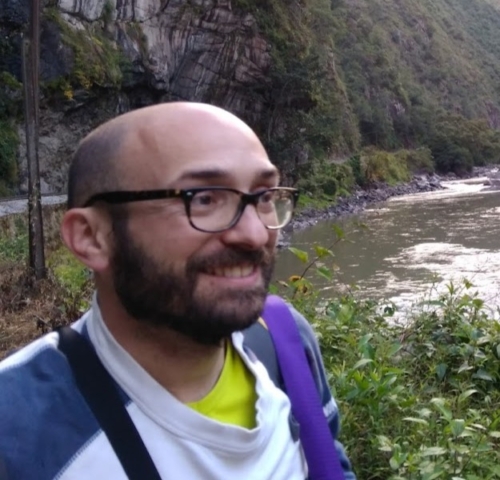
Prof. Gerardo Romano
Prof. Gerardo Romano is an Associate Professor of Applied Geophysics at the University of Bari “Aldo Moro,” where his research is mainly devoted to the use of electromagnetic methods to investigate the Earth’s subsurface across different scales — from near-surface applications to crustal-level studies.
His work develops along three main directions.
The first is exploration, where he employs geoelectrical and magnetotelluric (MT) techniques to study the underground in a variety of contexts. These range from hydrogeological investigations, aimed at understanding water resources, to crustal studies, which shed light on the structure and dynamics of the lithosphere, and even to archaeological prospection, where geophysical tools are used to detect buried remains without excavation.
A second major strand is monitoring, in which Prof. Romano explores the potential of MT methods to track the evolution of areas exposed to significant natural hazards, especially seismic risk. This line of research is closely tied to the broader challenge of better understanding and possibly anticipating the behavior of highly dynamic and vulnerable geophysical environments.
Finally, his third research focus is on methodological development. Here, he works on analyzing long-term time series of geophysical and environmental data, and on integrating electromagnetic methods with seismological approaches. This combination makes it possible to improve subsurface imaging, identify fluids in the underground, and achieve a more comprehensive, multiparametric view of geological systems.
Taken together, these research activities reflect Prof. Romano’s interest in developing and applying innovative geophysical tools that not only deepen our scientific understanding of the Earth but also contribute to managing risks and resources in practical contexts.
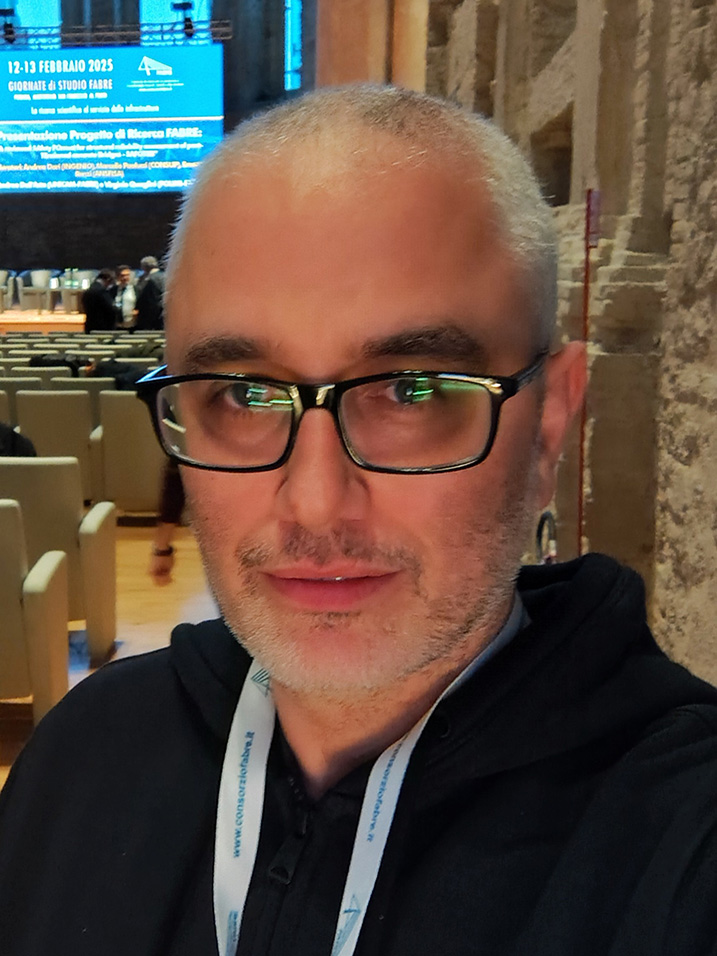
Dott.Luigi Capozzoli
Dr. Luigi Capozzoli is a researcher at the Institute of Methodologies for Environmental Analysis (IMAA) since 2020. He holds a degree in Civil Engineering, with a thesis focused on non-destructive techniques for assessing the safety of architectural heritage. He later earned a Ph.D. in Environmental Engineering from the University of Basilicata (Italy) focused on the use of geophysics for monitoring the diffusion of organic contaminant in the subsoil .
Since 2015, he has been in charge of the Hydrogeosite Laboratory at CNR-IMAA, where he utilizes geophysical methods to address engineering, archaeological, and environmental challenges. His research is particularly centered on enhancing the performance of electrical and electromagnetic techniques in complex and demanding environments, expanding their application across multiple scientific domains.
Currently, he serves as the Scientific Lead for the CNR Research Unit within the SUBGEO project (SUBmarine Groundwater Discharge analysis through an innovative and integrated GEOphysical approach).